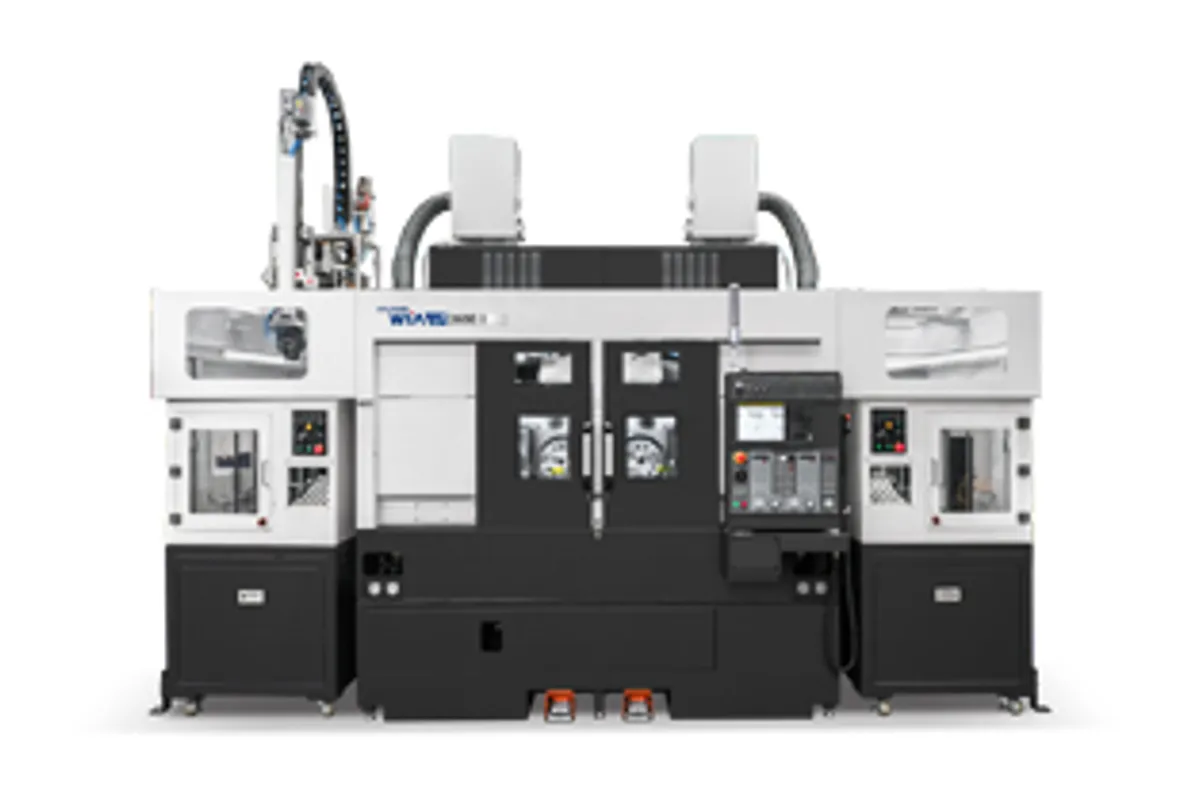
The Hyundai-WIA LF2600 II Series is an industrial-grade CNC Lathes & Turning Centers powered by the Standard CNC. a top spindle speed of 3,500 RPM, and a 3-axis kinematic layout. It supports standardized digital factory monitoring via MTConnect.
Hyundai WIA LF2600 II Series: 360 mm turning diameter, 190 mm X and 200 mm Z travel, belt-driven 3,500 RPM spindle with 15/11 kW (20/15 hp).
| Standardized Parameters & Ratings | |
|---|---|
| Manufacturer (Brand) | Hyundai-WIA (International) |
| Machine Type | CNC Lathes & Turning Centers |
| CNC Controller System | Standard CNC |
| Number of Controlled Axes | 3-Axis Simultaneous / Positioning |
| Maximum Spindle Speed | 3,500 RPM |
| Spindle Motor Rating | 15.0 kW |
| Spindle Taper Interface | Standard |
| Industrial IoT Protocol | MTConnect ANSI/MTC1.4 Compliant (Ethernet/TCP) |
| Max Turning Diameter | 360 mm (14.2 in) |
| Max Spindle Speed | 3,500 RPM |
| Spindle Motor Power | 15/11 kW (20/15 hp) |
| Spindle Drive | Belt |
| X-Axis Travel | 190 mm (7.5 in) |
| Z-Axis Travel | 200 mm (7.9 in) |
According to secondary market equipment benchmarks for November 2026, the Hyundai-WIA LF2600 II Series is estimated between $43,500 and $85,500 USD depending on machine hours, spindle condition, and tooling package. Financing and industrial lease options typically start around $674 / month.
Maximum turning diameter is 360 mm (14.2 in), X travel is 190 mm (7.5 in) and Z travel is 200 mm (7.9 in). The series rows carried here do not state a chuck size or a maximum turning length, so confirm both with WIA.
A belt-driven spindle with a maximum of 3,500 RPM and a motor listed at 15/11 kW (20/15 hp). No torque figure is given. The LF2200 II Series uses the same motor figures with a 4,500 RPM limit.
Go by part diameter. The LF2600 II turns 360 mm (14.2 in) with 190 mm (7.5 in) of X and 200 mm (7.9 in) of Z travel at up to 3,500 RPM. The LF2200 II Series turns 260 mm (10.2 in) with 140 mm (5.5 in) of X and 170 mm (6.7 in) of Z, runs to 4,500 RPM and lists rapids of 24 m/min (945 ipm).
Peer engineering insights, spindle reliability feedback, and real-world shop floor experiences.